

The Closet You Try Not to Look At
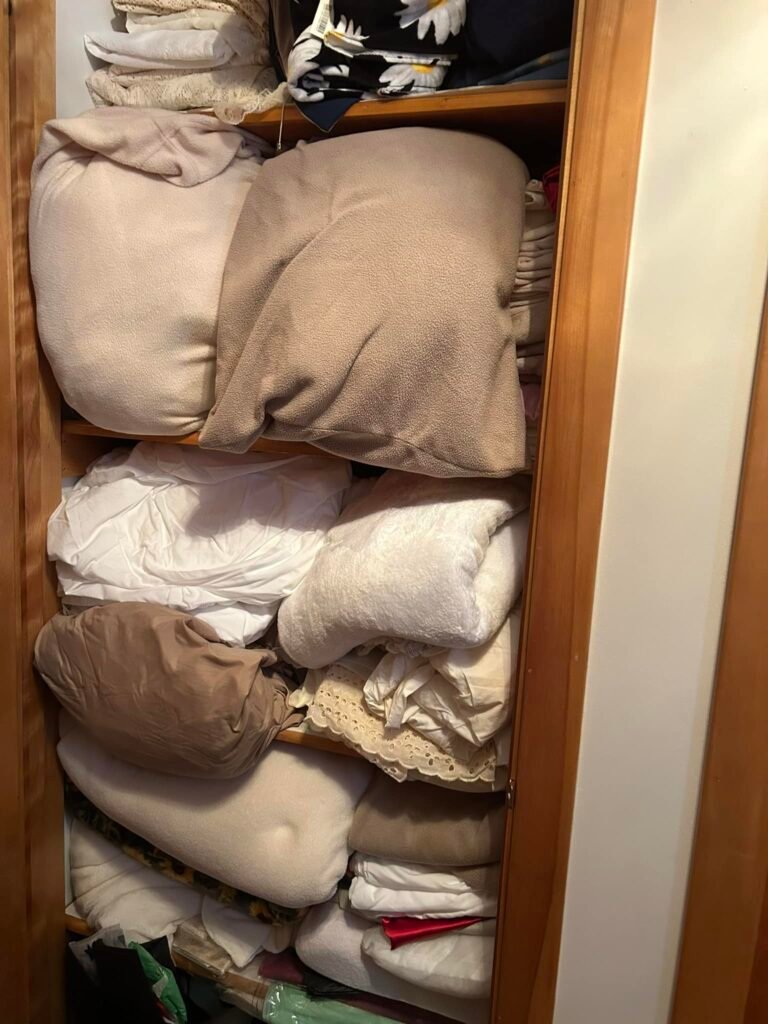
There’s a corner of your home where pillows go to die.
Maybe it’s the guest room closet. Maybe it’s under the bed. Maybe it’s a pile in the corner you’ve stopped seeing because looking at it reminds you of money wasted and mornings ruined.
The down pillow you bought because the hotel had one just like it, now flat as a pancake. The memory foam block that promised “NASA technology” now exiled because it felt like sleeping on a warm brick. The shredded foam pillow with the bag of extra stuffing you were too intimidated to open. Maybe even one of those cube things you saw on TikTok that worked great until you rolled onto your back and woke up with your chin pressed to your chest.
They’re all there. Your pillow graveyard.
Here’s what nobody tells you: The graveyard isn’t your fault. You didn’t fail those pillows. Those pillows failed you, and they failed you for specific, predictable, mechanical reasons that have nothing to do with your preferences or your body.
This guide explains exactly why each type of pillow fails, what your neck actually requires during sleep (hint: it’s not “softness”), and how to identify the one pillow design that addresses the root cause of the problem.
By the end, you’ll understand the physics behind your pain, and you’ll know exactly what to look for so the next pillow you buy is the last one you’ll ever need.
The Mechanical Problem Nobody Talks About: “The Gravity Gap”
Before we autopsy your pillow graveyard, you need to understand the physics of why pillows fail. Without this knowledge, you’ll keep buying the wrong solutions.
The core problem is called “The Gravity Gap.”
When you lie on your side, there’s a space between your ear and the mattress. For most adults, this gap measures between 4 and 6 inches, depending on shoulder width and mattress firmness.
Your pillow has one job: fill that gap completely while keeping your cervical spine (the seven vertebrae in your neck) in a straight, neutral line with the rest of your spine.
Here’s the physics problem: Your head weighs 10-11 pounds. That’s the weight of a bowling ball pressing down on whatever material is supposed to bridge that gap.
Most pillows can’t handle that load. They either:
- Collapse under the weight (leaving your neck unsupported)
- Resist too rigidly (creating pressure points on your ear and face)
- Start at the wrong height (forcing your neck up or down regardless of support)
The result? Your neck spends 6-8 hours in a kinked position. Your muscles work overtime trying to stabilize a misaligned spine. You wake up with what feels like whiplash, stiff, locked, sometimes unable to turn your head without sharp pain.
This is the “Gravity Gap” problem. And every pillow in your graveyard failed to solve it.
Pillow Graveyard Autopsy: Why Each Type Fails the Gravity Gap Test
Let’s examine the five most common pillow types and identify exactly why each one ended up in your closet.
Type 1: Traditional Down & Poly-Fill — The “Collapse” Failure
The Promise: Cloud-like softness. Hotel luxury. The feeling of sinking into a fluffy embrace.
The Mechanical Failure: Zero structural integrity under sustained load.
Here’s what happens. You fluff your down pillow, lay your head on it, and it feels wonderful—for about 20 minutes. Then the 11 pounds of your head displaces the filling. The feathers and air shift to the edges, leaving a crater where your head sits. Your neck, which was supposed to be supported, bends laterally toward the mattress.
By 2 AM, you’re essentially lying on a decorative sack with your ear touching the bed.
Your muscles, which should be resting, spend the night working overtime to prevent your spine from collapsing completely. By morning, they’re exhausted and inflamed. That’s your “locked neck.”
Why It’s in Your Graveyard: Down pillows rely on air for loft. Air displaces under pressure. There is no mechanism to maintain structure when a bowling ball sits on it for 8 hours.
Voice of the Graveyard: “I have to refluff it every time I turn over.” “It goes flat by midnight.” “I wake up with my ear on the mattress.”
Type 2: Solid Memory Foam — The “Brick and Heat” Failure
The Promise: Contouring support. Pressure relief. Space-age technology that molds to your unique shape.
The Mechanical Failure: Too rigid where it should yield, too fixed where it should adjust, and it traps heat that aggravates inflammation.
Memory foam solved the collapse problem, the material maintains structure under load. But it created three new problems:
Problem 1: The density is unforgiving. Solid memory foam pushes back against your ear and jaw with the same force it uses to support your neck. Side sleepers report crushed ear cartilage, jaw pain, and pressure headaches.
Problem 2: The height is fixed. A solid 5-inch block can’t adjust. If your shoulder gap is 4 inches, your neck is forced upward all night. If your gap is 6 inches, your neck drops. There’s no margin for error.
Problem 3: Heat retention. Dense foam traps body heat. Inflamed nerves are sensitive to heat. That “burning” sensation at the base of your skull gets worse when your pillow becomes a heating pad.
Why It’s in Your Graveyard: Solid foam prioritizes structure over adaptability. It’s the opposite extreme of down, rigid where it should be soft (face/ears), fixed where it should be flexible (height).
Voice of the Graveyard: “Feels like sleeping on a cardboard box.” “My ear hurts in the morning.” “Too hot! I wake up sweating.”
Type 3: Shredded Memory Foam — The “Lump and Shift” Failure
The Promise: The best of both worlds. Adjustable fill. Moldable comfort. Support you can customize.
The Mechanical Failure: The pieces don’t stay where you put them.
Shredded foam seems like the logical solution. You can add or remove filling to match your exact shoulder gap. In theory, it’s genius.
In practice, the shredded pieces migrate during sleep. You start with even distribution, but by 3 AM the foam has bunched under your ear and left a hollow under your neck. You’re back to the same “collapse” problem as down, just with fancier stuffing.
The “customization” process is also more complicated than advertised. You’re given a bag of extra foam chunks and told to experiment. Most people stuff the bag in a closet and never touch it.
Why It’s in Your Graveyard: Shredded foam solves the “brick” problem but reintroduces the “collapse” problem. Loose pieces can’t maintain consistent structural support through 8 hours of micro-movements.
Voice of the Graveyard: “It separates in the middle of the night.” “I can never get the same feel two nights in a row.” “Feels lumpy and inconsistent.”
Type 4: Cube and Block Pillows — The “One Position Trap” Failure
The Promise: Finally, a pillow designed specifically for side sleepers. The perfect height to fill the shoulder gap.
The Mechanical Failure: It only works if you never move.
Block-style pillows correctly identified the Gravity Gap problem. A 6-inch cube fills the space between ear and mattress for most side sleepers.
But here’s what the marketing doesn’t mention: Most people aren’t statue sleepers. You roll. You shift from side to back at 1 AM, maybe curl into a semi-fetal position by 4 AM. This is normal. Your body moves to relieve pressure points and maintain circulation.
A cube pillow punishes you for moving. Roll onto your back with a 6-inch block under your head, and your neck is suddenly bent forward at an extreme angle. Your chin presses toward your chest. Instead of neutral alignment, you’re in forced flexion, one of the worst positions for cervical health.
Why It’s in Your Graveyard: Cube pillows solve one problem (side sleeping height) while creating another (back sleeping disaster). They assume your body is a statue.
Voice of the Graveyard: “RIP to your neck if you roll onto your back.” “I feel trapped in one position.”
Type 5: Generic Contour Pillows — The “Cheap Scam” Failure
The Promise: Ergonomic design. Cervical support. Orthopedic engineering—all for $29.99.
The Mechanical Failure: It’s a $3 piece of foam with a $27 marketing budget.
The contour pillow market is flooded with cheap, generic products from overseas factories. White memory foam, butterfly shape, aggressive Facebook ads, “Doctor Recommended” claims with no actual doctors attached.
These fail for multiple reasons:
The foam quality is terrible. Low-density foam breaks down within weeks. The “memory” in memory foam requires specific density to function. Cheap foam doesn’t have it.
The dimensions are wrong. These pillows are often designed for different body proportions and don’t fit most Western shoulder widths. Users report them being “too small” or “too narrow.”
The off-gassing is unbearable. Cheap foam production uses volatile compounds that release chemical smells for days or weeks, triggering headaches before you even try to sleep.
There’s no real guarantee. Most offer 30 days or less, knowing customers won’t bother returning a $30 item.
Why It’s in Your Graveyard: Generic contour pillows are designed to look like a solution, not to be one. The product is an afterthought to the marketing.
Voice of the Graveyard: “Smells like a chemical factory.” “Way smaller than it looks in the picture.” “Went flat in two weeks.”
The 3 Questions That Would Have Saved You Hundreds of Dollars
Now that you understand why pillows fail the Gravity Gap test, here’s the framework for evaluating any pillow before it enters your home.
Question 1: Does It Fill YOUR Specific Shoulder Gap?
The shoulder gap is the distance between your ear and the mattress when you’re lying on your side without a pillow.
How to measure: Lie on your side on your mattress. Have someone measure from the mattress surface to the side of your head at ear level. For most adults, this falls between 4 and 6 inches.
The problem: Most pillows come in one height. If that height doesn’t match your specific gap, you start every night with structural misalignment.
What to look for: A pillow with either adjustable height or a contour design that accommodates a range of shoulder gaps, typically with different zones for different sleeping positions.
Question 2: Does It Maintain Structure Under 11 Pounds of Pressure for 8 Hours?
Your head weighs 10-11 pounds. That’s the force your pillow must resist continuously, not just for the first 20 minutes when you’re falling asleep, but at 3 AM when it matters most.
The test isn’t how it feels at 10 PM. The test is how it performs at 3 AM after hours of sustained load.
What to look for: High-density foam with “slow rebound” properties. This means the foam compresses under pressure but returns to shape when released, and critically, it doesn’t fully compress in the first place. The pillow should yield enough to be comfortable but resist enough to maintain structural support.
Question 3: Can You Change Positions Without Waking Up?
Unless you’re recovering from surgery, you need to move during sleep. Position changes relieve pressure points and maintain circulation.
Your pillow should accommodate movement, not punish it.
What to look for: A design with distinct zones, a center area for back sleeping, elevated sides for side sleeping, and gradual transitions between them that don’t jolt you awake when you roll.
Why “Suspension” Beats “Softness”: The Mechanism That Actually Works
The pillow industry has spent decades selling “softness.” Soft like a cloud. Soft like a hug. Soft like sleeping on a marshmallow.
Softness is the problem, not the solution.
Your neck doesn’t need softness. Your neck needs suspension.
Think of a bridge. A bridge doesn’t work because it’s soft. A bridge works because it has structural supports that distribute weight while maintaining position. Remove the supports, and the bridge collapses into the river, taking everything on it down.
Your pillow is supposed to be a bridge spanning the Gravity Gap. If that bridge collapses (which is exactly what soft pillows do), your neck falls with it.
Suspension means: The pillow yields enough to be comfortable but maintains enough structure to keep your spine aligned through 8 hours of sleep.
The engineering principles:
Density matters. Higher-density foam resists compression better. This is measured in ILD (Indentation Load Deflection). Cheap pillows use low-ILD foam because it’s cheaper. Quality ergonomic pillows use higher-ILD foam in structural zones.
Zone differentiation matters. Your head, neck, and shoulders have different support needs. A single-density pillow can’t address all three. Effective design uses different foam densities or contour depths—softer where you need pressure relief (face, ears), firmer where you need support (cervical spine).
Geometry matters. The shape determines how weight is distributed. A flat pillow concentrates force in one area. A contoured pillow spreads force across multiple contact points.
This is why your previous pillows failed. They were designed for softness, not suspension.
The Ergo Z Pillow: How It Solves the Gravity Gap
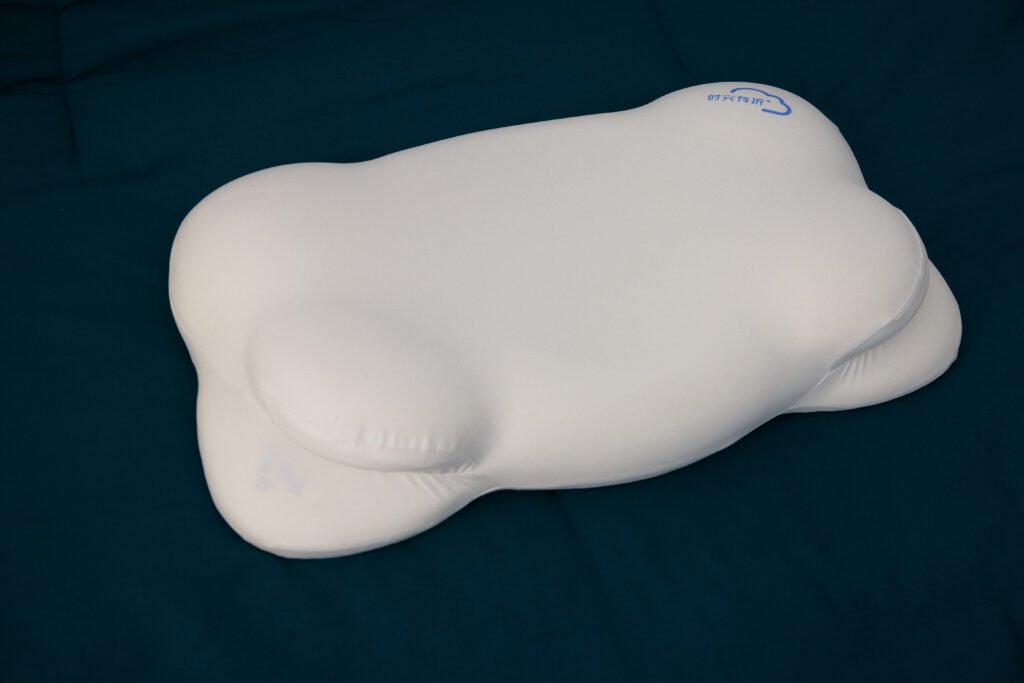
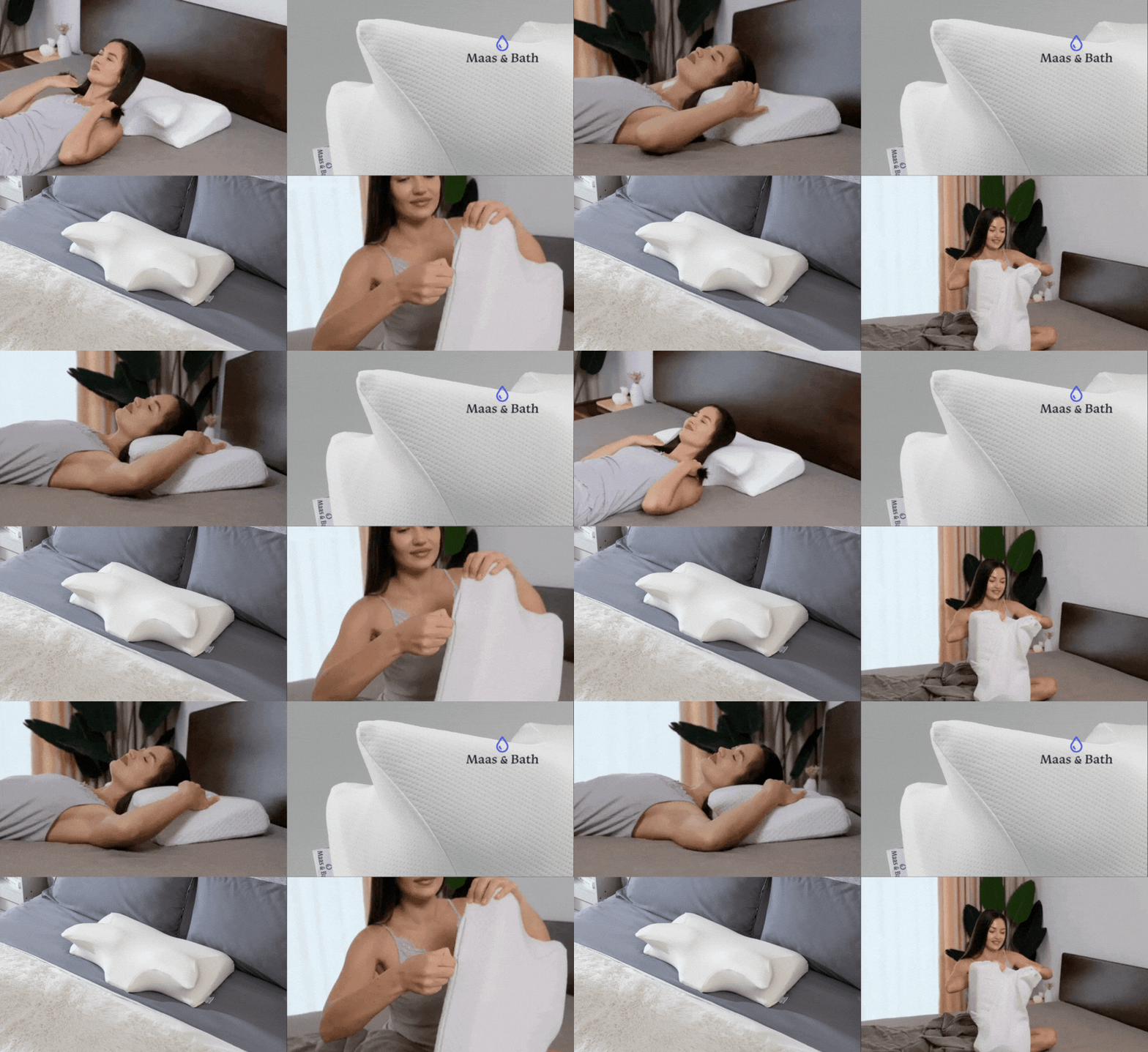
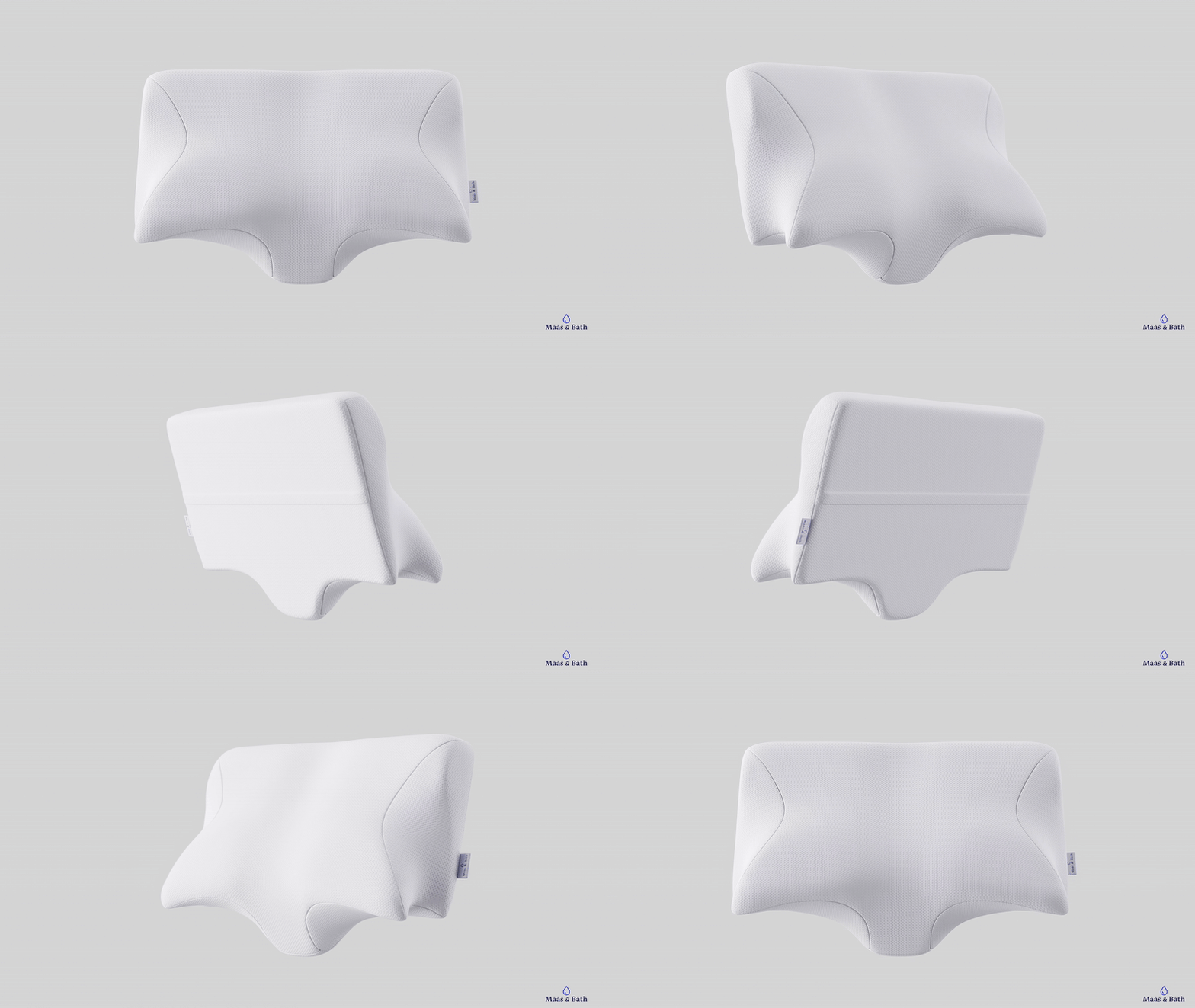
The Ergo Z Pillow by Maas & Bath is engineered specifically to address the three mechanical requirements we’ve outlined.
Solving Question 1: Dual-Height Design for Different Shoulder Gaps
The Ergo Z features a 2-in-1 contour design with two distinct sleeping surfaces:
The Horn Side (5.5 inches): The elevated contour side for side sleepers with average to broad shoulders. This height fills the Gravity Gap for most adults without forcing the neck upward.
The Roll Side (4.7 inches): The lower, curved side for back sleepers or side sleepers with narrower shoulders. The natural curve follows cervical lordosis, the slight inward curve your neck should maintain.
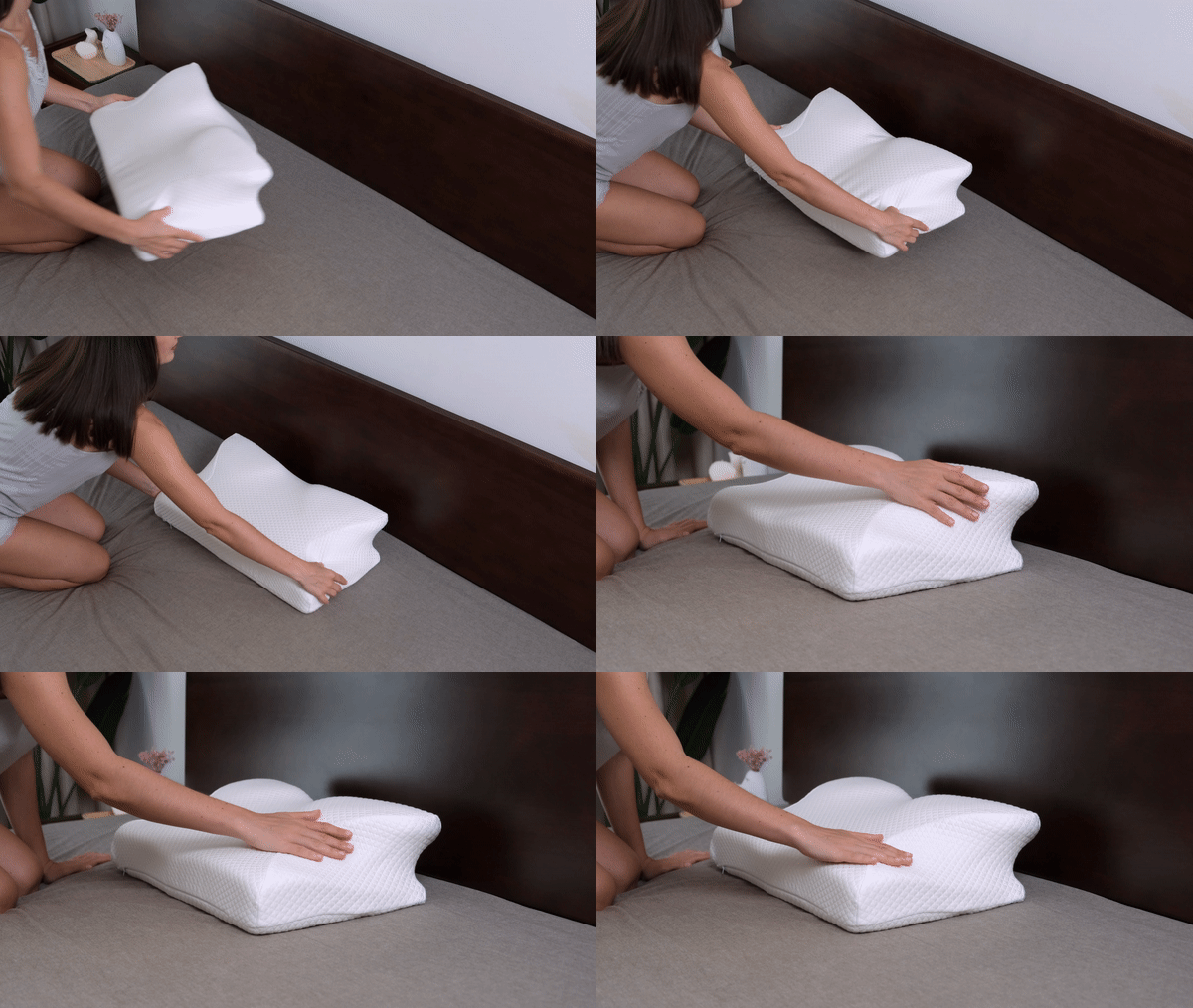
You’re not locked into a single height. You can flip the pillow based on your sleep position or mattress firmness.
Solving Question 2: High-Density Slow-Rebound Foam That Doesn’t Collapse
The Ergo Z uses 100% memory foam with 5-second slow-rebound technology.
What this means: When you press into the foam, it compresses gradually, not instantly. When you release, it returns to shape over approximately 5 seconds. This indicates higher-density foam that resists complete compression under load.
Your head doesn’t sink to the mattress at 3 AM. The bridge holds.
The foam is CertiPUR-US certified: no off-gassing, no chemical smell, verified safe content and durability standards.
Solving Question 3: Arm Grooves and Contour Zones for Position Changes
Arm Placement Grooves: The sides include cutout zones where your arm can slide underneath without creating pressure points. Side sleepers who tuck an arm under their pillow can do so without the pillow shifting or their arm going numb.
Center Cradle: The middle section has a slight depression that cups the head during back sleeping, preventing the “bobblehead” rolling that wakes you up.
Wing Transitions: The elevated sides taper gradually toward the center. You can roll from side to back without your head suddenly dropping or hitting a wall of foam.
Honest Assessment: Pros and Cons
| Pros | Cons |
|---|---|
| Dual-height design (4.7″ and 5.5″) accommodates different shoulder widths | The contoured shape makes finding standard pillowcases difficult |
| High-density foam maintains structure throughout the night | 1-2 week adjustment period as your body adapts to proper alignment |
| Arm grooves allow comfortable side sleeping without numbness | The shape looks different from traditional pillows |
| CertiPUR-US certified, no chemical off-gassing smell | Single firmness option (no soft/medium/firm choices) |
| Breathable mesh cover is machine washable | Premium price point compared to generic options |
| 90-day money-back guarantee | Not designed for exclusive stomach sleepers |
| Works for back, side, and combination sleepers |
How to Spot Pillow Scams Before They Reach Your Graveyard
The ergonomic pillow market is flooded with cheap products designed to capture impulse purchases. Before you buy anything, check for these warning signs:
Red Flag 1: Generic White Foam, Butterfly Shape, No Brand Identity
If the pillow looks identical to 47 other listings, it probably came from the same factory. “Brands” slap logos on generic molds, mark up 400%, and spend the difference on ads.
Instead, look for: Proprietary design elements, specific engineering claims with measurements, and a brand with real identity.
Red Flag 2: No Foam Certifications
Legitimate memory foam carries certifications like CertiPUR-US or Oeko-Tex. These verify the foam meets safety standards for emissions, content, and durability.
No certification mentioned? Assume uncertified foam that may off-gas volatile compounds causing headaches and irritation.
Instead, look for: Explicit certification badges you can verify on the certifying organization’s website.
Red Flag 3: 30-Day Returns or Less
Adjusting to a new pillow takes 2-3 weeks. A 30-day return window gives you maybe one week to evaluate after adjustment. Scam sellers are betting you won’t bother returning a cheap pillow.
Instead, look for: 90-day or longer trial periods that give genuine evaluation time.
Red Flag 4: “Too Good to Be True” Pricing
A quality memory foam pillow with proper certifications costs money to produce. When you see an “ergonomic cervical pillow” for $19.99, ask: What corners were cut?
The answer is usually all of them.
Instead, look for: Price points reflecting actual material and engineering costs. For quality ergonomic pillows, expect the $60-$120 range.
Red Flag 5: Fake “Doctor Recommended” Claims
Unless you see a named doctor with credentials who has actually tested the product, assume “Doctor Recommended” is unregulated marketing language anyone can use.
Instead, look for: Specific claims about ergonomic principles or endorsements from verifiable professionals.
The Investment Math: Compare to Treatment, Not Bedding
Most people evaluate pillow prices by comparing to other pillows.
“Why spend $70 when Target has pillows for $20?”
This framing is wrong. You’re not buying bedding. You’re buying pain management.
The real cost comparison:
| Pain Management Option | Cost |
|---|---|
| Single chiropractor visit | $60-$100 |
| Monthly chiropractic care | $240-$400/month |
| Single massage therapy session | $80-$150 |
| Annual massage therapy (monthly visits) | $960-$1,800/year |
| Ergo Z Pillow (one-time) | ~$70 |
If the pillow eliminates even one chiropractor visit per month, it pays for itself in 30 days. Everything after that is savings.
The 90-Day Guarantee = A Risk-Free Medical Experiment
The Ergo Z comes with a 90-day money-back guarantee. This isn’t just a return policy, it’s an invitation to test whether proper cervical alignment reduces your pain.
You’re not committing $70 to a pillow. You’re committing to a 90-day trial of potential pain relief with zero financial risk.
If it works: You’ve solved a problem costing you hundreds annually. If it doesn’t: You send it back and you’re exactly where you started.
That’s a bet worth taking.
Your Final Checklist: Close the Graveyard for Good
Before your next pillow purchase, verify:
Structural Requirements:
☐ The pillow addresses your specific shoulder gap (measure yours: most adults are 4-6 inches)
☐ The foam density is sufficient for 8-hour support (look for “high-density,” “slow rebound,” or specific ILD ratings)
☐ The design accommodates position changes (distinct zones for back and side sleeping)
Quality Requirements:
☐ The foam is certified (CertiPUR-US or Oeko-Tex—no certification = no purchase)
☐ The guarantee is meaningful (90 days minimum)
☐ The brand is legitimate (real website, real contact information, real customer service)
The Ergo Z Pillow Passes This Checklist
✓ Shoulder Gap: Dual-height design (4.7″ and 5.5″) accommodates different body types
✓ Foam Density: High-density slow-rebound memory foam maintains structure
✓ Position Accommodation: Contour zones for back sleeping, elevated wings for side sleeping, arm grooves for combination sleepers
✓ Certification: CertiPUR-US certified, odorless, non-toxic
✓ Guarantee: Full 90-day money-back guarantee
✓ Brand Legitimacy: Maas & Bath, established company, U.S.-based customer service
Stop Adding to the Graveyard
You’ve spent enough on pillows that collapsed, overheated, trapped you in one position, or turned out to be cheap foam with expensive marketing.
You understand the problem now: The Gravity Gap. And you understand what solves it: Suspension, not softness. Structure that holds through 8 hours. Design that works whether you’re on your side or your back.
The Ergo Z Pillow is engineered around these mechanical requirements—not around marketing buzzwords.
And with a 90-day guarantee, there’s no risk in finding out if it works for you.
Your pillow graveyard has enough residents.
We may earn a small commission if you buy through our links, at no cost to you.
The Ergo Z Pillow is currently available with up to 65% off for new customers. Stock is limited. The 90-day money-back guarantee means you can try it completely risk-free.
Related Reading: